
Studying electrical engineering while working full time: How?
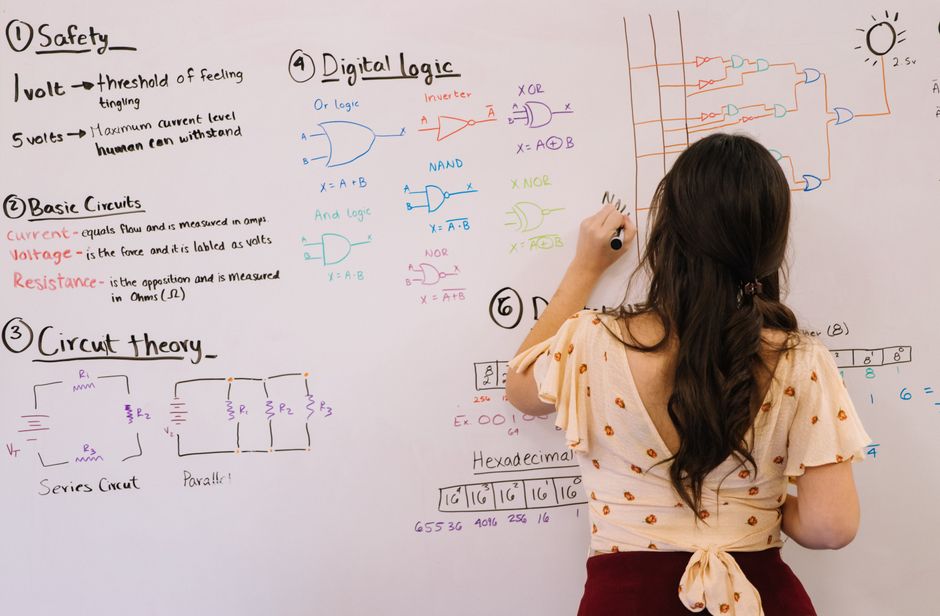
Studying electrical engineering while working full time is feasible with a part-time course load, a fixed weekly study schedule, and early planning for labs and course prerequisites. Online programs can still have semester deadlines and hands-on lab work. UND estimates four to five years for its 126-credit online bachelor’s degree; your timeline depends on course availability, transfer credits, and how many classes you can sustain.
Can I earn an electrical engineering degree while working full time?
Yes, you can earn an electrical engineering degree while working full time if you choose a program and course load that fit around your job. The University of North Dakota (UND) says its online B.S.E.E. has the same classes as its on-campus program, uses asynchronous coursework, and requires 126 credit hours. Asynchronous does not mean self-paced: semester schedules and deadlines still apply.
Working students need to plan for the work that happens outside scheduled class time. Rice alumnus Saadiah Gul completed a part-time electrical engineering M.E.E. in three years while working full time. Her account describes late evenings spent on assignments and weekends in FPGA and VLSI labs. That is one graduate’s experience, not a promise about another program’s workload.
Before enrolling, check four things: whether the degree is ABET-accredited, how the school will evaluate transfer credits, which courses must be taken in sequence, and how required labs are delivered. These details determine whether a nominally flexible program fits your actual calendar.
How many electrical engineering classes can I take while working full time?
There is no single course load that works for every full-time employee; start with the number of courses you can complete while protecting steady study time. A practical first term is one demanding technical course, or two courses if their schedules and workload are compatible. Add another only after you have seen how lectures, problem sets, exams, and labs fit into a normal work week.
Build a schedule before choosing classes. For example, reserve a few weekday evenings for reading and problem sets, one longer weekend block for lab work, and a separate short session to review upcoming deadlines. Treat those blocks as appointments. Keep one open period for unexpected work demands or difficult material.
Course count alone can mislead. Rice’s account notes that 88% of the electrical engineering courses Gul took involved some level of programming; that figure describes her course mix, not a program-wide rate. Ask departments for sample syllabi and lab expectations, then plan around the actual work rather than the number of course titles.
| Planning choice | What it means for a working student |
|---|---|
| One course | A lower-risk way to learn the program’s pace and lab demands. |
| Two courses | Can work when deadlines do not collide and weekly study blocks are protected. |
| More courses | Requires a clear view of course sequencing, lab hours, and available recovery time. |
How long does a part-time electrical engineering degree take?
A part-time electrical engineering degree can take several years; use the published program estimate as a baseline, then confirm how your credits and course sequence affect it. UND estimates most students complete its 126-credit online B.S.E.E. in four to five years. Rice’s example is a different credential: one working professional completed a part-time M.E.E. in three years.
These timelines are not interchangeable. A bachelor’s and a master’s have different requirements, and an individual completion story does not establish the normal pace for all students. Transfer credits, prerequisite chains, and whether required courses are offered when needed can change the path.
Ask an adviser to map the degree term by term before you commit. Mark prerequisites, required labs, course availability, and any terms when work typically peaks. A slower plan that you can sustain gives you a clearer timeline than an ambitious schedule that depends on every week going perfectly.
How do online electrical engineering labs work?
Online electrical engineering labs can use remote lab kits, but the exact format and hands-on requirements vary by program. UND says students in its online B.S.E.E. complete hands-on laboratory requirements remotely using lab kits, and that no campus visit is required for this degree. Confirm those requirements directly for the program and courses you plan to take.
Ask whether equipment is mailed or purchased, what tasks must be completed at home, how results are submitted, and whether any lab sessions happen at set times. Also check the time needed to set up, troubleshoot, and document lab work. A lab that is asynchronous may still have a fixed deadline.
UND’s program is ABET-accredited and says online students take the same classes as on-campus students. Use that as a prompt to verify accreditation and course equivalence for any program under consideration, rather than assuming all online degrees share the same structure.
Can my employer help pay for an electrical engineering degree?
Your employer may help pay for an electrical engineering degree, but the rules depend on the employer’s policy and approval process. Virginia Tech’s Policy 4800 illustrates how specific a benefit can be: eligible salaried employees can receive waivers for Virginia Tech courses or reimbursement for courses at other accredited institutions, subject to approval and available funding.
Under that policy, employees generally become eligible after 90 days of salaried employment. Full-time employees may receive up to 12 credit hours per academic year, with no more than 6 per enrollment period. Supervisor and department-head approval is required before enrollment; reimbursement also requires successful course completion and supporting documentation. Graduate-level educational aid above the applicable IRS excludable limit may be taxable.
Before registering, get the policy details in writing. Check eligibility, annual limits, deadlines, required grades or completion proof, approved institutions, and whether the benefit applies to your degree level. Do not assume a reimbursement will arrive before tuition is due.
Frequently Asked Questions
Is 28 too late to become an electrical engineer?
No. The available sources do not set an age limit for entering the field. The Bureau of Labor Statistics says electrical engineers typically need at least a bachelor’s degree in a related engineering field, so the practical question is whether the program and its workload fit your circumstances.
Will electrical engineers be replaced by AI?
The cited Engineers Australia report describes AI as a tool for administrative work and first drafts, with engineers still using critical thinking to check outputs and handle complex work. Its survey and analysis do not establish that engineering roles will be replaced or guarantee that they will not be.
What is the dropout rate for electrical engineering?
The supplied National Science Foundation report does not give one generalizable dropout rate for electrical engineering. It examines persistence and attrition among Black students in electrical, computer, and mechanical engineering through interviews and survey findings, which do not represent a single overall rate.
Can you make $500,000 as an electrical engineer?
The BLS reports that the highest 10 percent of electrical engineers earned more than $184,300 in May 2025. That puts $500,000 far above the published top-decile threshold; the data do not rule out exceptional individual compensation.
Sources
- University of North Dakota — Online Electrical Engineering B.S.E.E.
- Rice University — Perspective: Pursuing the M.E.E. while working full-time
- Virginia Tech — Tuition Benefits Program for Salaried Employees, Policy 4800
- U.S. Bureau of Labor Statistics — Electrical and Electronics Engineers
- National Science Foundation Public Access Repository — Explaining Choice, Persistence, and Attrition
- Engineers Australia — The impact of AI and generative technologies on the engineering profession
Read next

Can I Become a Teacher With a Bachelor's Degree in Another Subject?
Compare alternative teacher certification routes, classroom requirements, exams, timelines, and state rules for career changers with a bachelor's degree.
How Should I Train for an Industrial Maintenance Technician Job?
Compare college programs, paid apprenticeships, and employer training to choose a practical path into industrial maintenance.

How Do I Apply to a Swiss University and Get a Student Residence Permit?
A practical guide to Swiss university admission, student visas, residence permits, proof of funds, canton rules, and work limits.

How Do I Find a Beginner-Friendly Craft Class Near Me?
Find beginner-friendly local craft classes by comparing level, format, supplies, costs, equipment, and access before you enroll.