
How Do I Choose Between Polishing, Touch-Up Paint, and Professional Scratch Repair?
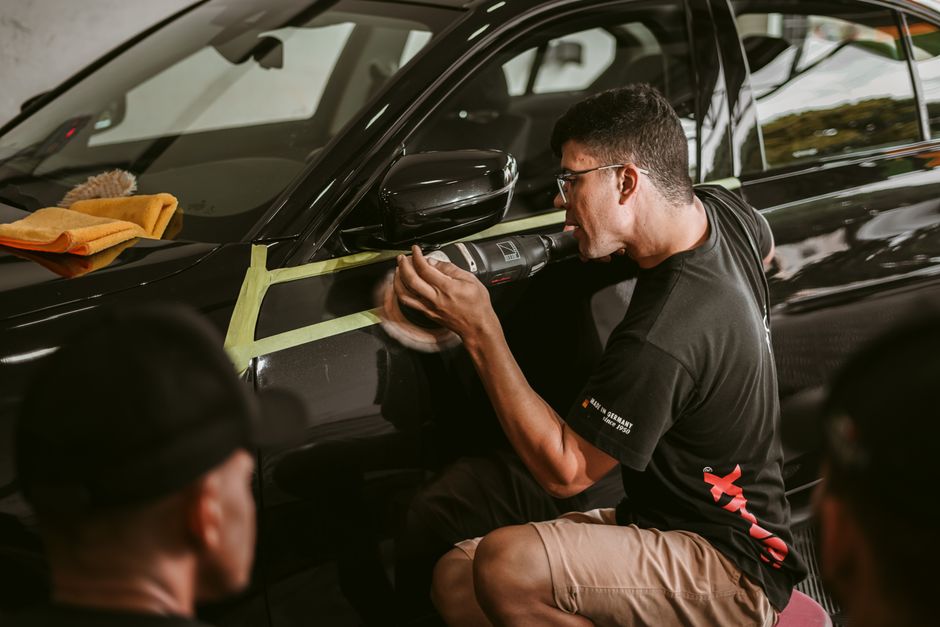
Use polishing only when the scratch is limited to clear coat and your fingernail feels it without catching. A catching nail, a white or grey mark, visible primer, or bare metal means stop polishing: use an appropriate paint repair or have a professional assess it, especially where metal is exposed. Do not use a universal polishing limit.
The useful decision is not “Which product should I buy?” It is “Which paint layer did the scratch reach?” That one call determines whether you are improving a surface defect, covering a damaged finish, or preventing corrosion.
Can a scratch that catches my fingernail be buffed out?
Usually no: if your fingernail catches in the scratch, treat it as deeper than a clear-coat-only defect and do not keep buffing. 3M’s guidance is direct: its Scratch Removal System is for a scratch you can feel but where the nail does not catch. If the nail catches, or if metal is visible, 3M directs owners to the manufacturer repair procedure or a professional technician.
This is the “catch test.” It saves time because it prevents a common bad trade: trying to erase a deep groove by removing more surrounding clear coat. 3M says excessive sanding or compounding can cut through clear coat into the color coat, turning a localized scratch into damage that requires professional repainting.
RACV reaches the same practical split. Its guide says a catching nail likely means the scratch has penetrated the base coat or primer; a nail that does not catch may indicate clear-top-coat damage. Use the test as a stop signal, not as permission to keep escalating abrasives.
| What you see or feel | Likely damage level | Best next move | Expected result |
|---|---|---|---|
| Fine mark; nail feels it but does not catch | Clear-coat defect | Use a clear-coat scratch-removal process as directed | Appearance may improve |
| Nail catches; white or grey mark | Likely base-coat or primer damage | Stop polishing; plan paint repair or professional assessment | Polishing alone will not restore missing paint |
| Metal or rust visible | Finish breached to metal | Use a proper corrosion-control and refinishing process | Protection and repainting are required |
The supplied sources do not provide a validated “water test” for scratch depth. Water can change how a mark looks, but it should not overrule the nail, color, and visible-metal checks supported by the cited repair guidance.
How can I tell whether a scratch is only in the clear coat?
A scratch is most plausibly clear-coat-only when it appears as a lighter or faded mark and your fingernail does not catch in it. RACV describes vehicle paint as layers of primer, base coat, and top coat or clear coat. Its assessment connects lighter or faded marks with top-coat damage, white or grey marks with base-coat damage, and metal or rust with deeper primer-level damage.
Check in good, even light. First, look for a surface-looking mark rather than a break in color. Second, move a clean fingernail gently across it. Third, inspect for any visible metal, rust, or a colour change that looks like paint is missing. The point is classification, not diagnosis by wishful thinking.
There is little margin for error. A peer-reviewed automotive-coatings study published through the National Center for Biotechnology Information describes clear coat as typically 30 to 50 micrometers thick and all coating layers together as roughly one-tenth of a millimeter. The study distinguishes shallow mar defects from fracture scratches caused by items such as keys, branches, or carts; the latter can extend down to bare metal.
That scale explains why a deep scratch does not become shallow through determination. If you cannot confidently classify it as clear-coat-only, choose the conservative path: stop abrasive work and get the repair method confirmed. The same discipline applies when choosing practical products elsewhere: use the product for the condition it is designed to address, rather than stretching it beyond its job.
Do car scratch-removal kits actually work?
Yes, scratch-removal kits can improve fine clear-coat defects, but they do not replace paint that has been cut through or restore deep, wide scratches. 3M says its system targets clear-coat defects, including fine scratches from automatic car-wash brushes, using 3000-grit abrasive, rubbing compound, and scratch remover to sand, compound, and polish a thin layer of clear coat.
That is a narrow but worthwhile use case. The kit’s job is to level the area around a shallow defect enough to improve its appearance. Its job is not to fill a deep groove, recreate a missing color coat, or protect bare steel.
- Classify first. Use the catch test and visual checks before opening a kit.
- Match the method. For a non-catching clear-coat mark, follow the product’s process exactly rather than improvising with repeated abrasion.
- Set a stop point. If the mark is deep, wide, catches your nail, or exposes metal, stop and move to paint repair or professional assessment.
- Protect breached metal correctly. Toyota’s published refinishing procedure calls for metal conditioner, conversion coating, and two-part epoxy primer before later refinishing steps.
Do not confuse DIY, mobile repair, and body-shop repainting as interchangeable price tiers. The supplied sources do not provide comparable costs, durability figures, or finish-quality measurements for those options, and they do not document mobile-repair procedures. What they do establish is the decision boundary: clear-coat defects may be improved with the right kit; deeper damage can require repainting; bare metal needs corrosion-aware preparation and refinishing.
Run this short drill before buying anything: inspect the mark, perform the gentle catch test, and write one label beside it: “clear coat,” “deeper paint,” or “metal visible.” Then choose only the repair path that matches that label. That prevents a small cosmetic defect from becoming a larger refinishing job.
Frequently Asked Questions
Will polishing remove too much clear coat?
Yes. I-CAR reports that clear coat is about 2.0 mils of an average 4.0-to-6.0-mil basecoat/clearcoat surface, and removing too much can cause hazing, discoloration, peeling, and finish failure. There is no universal safe removal limit because the original amount of clear coat varies, so stop rather than repeatedly sand or compound a stubborn scratch.
Should I use touch-up paint or take a deep scratch to a body shop?
If your fingernail catches, 3M says not to use its clear-coat scratch-removal system; follow the vehicle manufacturer's repair procedure or see a professional. RACV similarly links a catching nail with deeper base-coat or primer damage, while exposed primer requires painting the panel. A professional repair is the more appropriate route when the scratch is deep, wide, reaches metal, or needs refinishing.
How do I protect a scratch that has exposed primer or metal from rust?
Treat visible metal as urgent damage rather than a cosmetic mark. Toyota's published repair procedure calls for a metal conditioner, conversion coating, and two-part epoxy primer before subsequent refinishing steps. RACV warns that exposed metal can collect air, water, dirt, and particles and quickly develop rust, so arrange qualified repair if rust is visible.