
Used Jeep Gladiator Guide: Pick the Right Year and Avoid Trail Damage
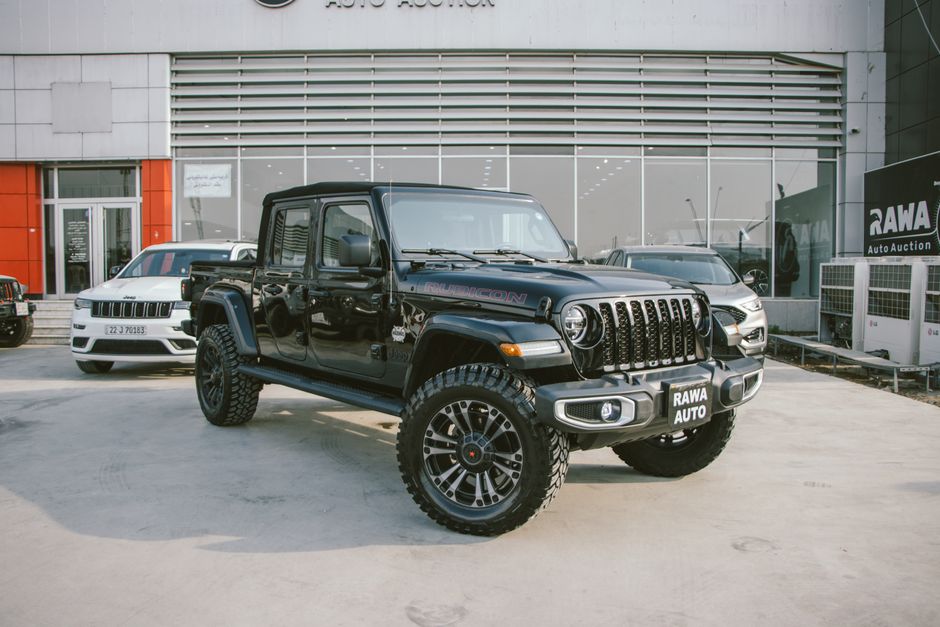
The strongest used Jeep Gladiator choice is the truck with a clean recall record, documented maintenance, intact underbody protection, and a price that leaves real room below a comparably equipped new model. The supplied public sources do not identify one model year with the fewest problems, so buy condition and equipment history first, then choose Rubicon for slow technical trails, Mojave for faster rough terrain, or Sport-based trims for towing and daily use.
Which used Jeep Gladiator years have the fewest problems?
The available sources do not establish that any Gladiator model year has the fewest problems, so do not let a seller turn a model year into a shortcut for condition. The useful split is equipment and recall exposure: manual-transmission 2020-2023 trucks require special recall scrutiny, and 2021-2022 trucks with the 3.0-liter diesel require fuel-system recall scrutiny.
For a buyer comparing older and newer trucks, the 2024 model brings concrete equipment changes rather than a published reliability verdict. Stellantis states that side-curtain airbags became standard for both rows for 2024, while forward-collision warning and adaptive cruise control with stop became standard on Sport S and higher trims. That makes a later truck easier to evaluate for safety equipment, but it does not erase the need for a vehicle-specific inspection.
Use the paperwork-first rule: before a long test drive, match the VIN to dealer service records, confirm recall completion, and identify the engine and transmission. Then compare the truck's asking price against its mileage, factory-warranty status, condition, and exact trim. Public data in this source set does not publish used asking prices, incentives, or a year-by-year record of steering, electrical, or infotainment complaints. Do not invent certainty where the data does not provide it.
| Option | Who it suits | Published cost | Key limitation |
|---|---|---|---|
| 2024 Sport | Buyer who wants the lowest published 2024 starting MSRP | $37,895 MSRP before $1,895 destination charge | Specific towing, payload, and optional-equipment configuration not published for this starting-price example |
| 2024 Sport S | Buyer who wants standard forward-collision warning and adaptive cruise control with stop | $41,395 MSRP before destination charge | Used asking price not published |
| 2024 Rubicon | Rock-crawling buyer | $52,995 MSRP before destination charge | Used asking price not published |
| 2024 Mojave | Buyer focused on higher-speed rough terrain | $52,995 MSRP before destination charge | Used asking price not published |
Are 2020 and 2021 Jeep Gladiators safe to buy after recalls?
Yes, a 2020 or 2021 Gladiator can be a reasonable purchase after recalls, but only after you verify that the exact truck received the prescribed remedy. For 2020-2023 manual-transmission Gladiators, NHTSA Recall 19A describes an overheating clutch pressure plate that can fracture, damage the transmission case, expel heated debris, and create a fire risk.
The repair is not a vague dealer check. The NHTSA recall notice for 23V-116 says the remedy requires a clutch replacement plus Instrument Panel Cluster and Powertrain Control Module software updates. Revised dealer instructions made remedies available for 2020 vehicles on May 17, 2024, for 2021 vehicles on March 26, 2024, and for 2022 vehicles on July 13, 2024. Ask for the completed repair order, not a verbal assurance.
If the truck is a 2021 diesel, add a second check. NHTSA Recall Z96 covers 2021-2022 Gladiators equipped with the 3.0-liter diesel engine because a failed high-pressure fuel pump can send debris into the fuel system, cause fuel starvation, and lead to an unexpected loss of motive power. The NHTSA notice for 22V-767 specifies a fuel-pump replacement for a running vehicle; a confirmed failure can require replacement of the pump, rails, lines, injectors, filter, and in-tank pump, plus flushing.
Safety equipment is a separate decision from recall status. For 2021-2023 Gladiators, IIHS reports Good ratings in the original moderate-overlap frontal evaluation and roof-strength test. Its optional Full Speed Forward Collision Warning Plus system earned a Superior vehicle-to-vehicle front-crash-prevention rating and avoided collisions in both its 12-mph and 25-mph tests. Verify that the individual truck actually has that optional system; IIHS lists blind-spot detection as optional and pedestrian front-crash prevention as unavailable on its model-year page.
What should I inspect on a used Gladiator that has been off-road?
Inspect a trail-used Gladiator from the underside out, because cosmetic shine does not answer the expensive questions. Jeep identifies skid plates as protection from boulders and sharp rocks, and rock rails as protection at the vehicle's base. Those parts should show you whether the truck met rocks as intended or absorbed impacts badly enough to leave bends, gouges, missing fasteners, or damaged mounting points.
Run the park, crawl, drive sequence. First, park it on level ground and look for uneven stance, tire contact marks, missing fasteners, damaged skid plates, bent rock rails, and leaks around the solid axles. Jeep states that all Gladiators use Dana solid axles, while Mojave models use upgraded heavy-duty Dana 44 axles. Second, crawl underneath with adequate lighting and look for impact evidence beyond the protective hardware.
- Check the protection. Look at skid plates and rock rails for deformation rather than treating scratches alone as a failure. The question is whether the protection did its job without transferring damage to mounts or adjacent components.
- Check the drivetrain behavior. During the test drive, listen and feel for abnormal behavior while accelerating, braking, and turning. Jeep warns that using 4H on typical paved roads puts unnecessary stress on tires and drivetrain, so ask how the previous owner used four-wheel drive.
- Check trim-specific hardware. On a Rubicon, confirm the front sway-bar disconnect and locking-differential functions. Jeep says the disconnect operates below 18 mph. On a Mojave, inspect the FOX shocks, hydraulic jounce bumpers, front lift, and rear-locker operation.
- Check modifications as a system. Ask for receipts, installation records, and the original parts where applicable. A lift, tires, lights, or wiring change is not automatically disqualifying; undocumented work makes the repair risk harder to price.
Use the same document-first discipline that helps buyers safely buy commercial inventory from Chinese suppliers: verify what is being sold, who performed the work, and what evidence supports the condition claim. The seller's story is context. Records and inspection are proof.
Should I buy a Gladiator that is out of factory warranty?
Buy an out-of-warranty Gladiator only when its lower price clearly compensates for the repair risk, missing coverage, and condition uncertainty. Jeep says its limited factory warranties generally cover defects or damage resulting from factory-installed parts, and its common basic limited-warranty duration is 3 years or 36,000 miles. Certain components, including powertrain components, can have longer coverage, so confirm the truck's specific coverage instead of assuming a blanket expiration date.
Warranty transfer is useful, but it is not a rescue plan. Jeep's warranty information says the FCA US new-vehicle limited warranty stays with the vehicle and is transferable to a second owner. It also excludes routine maintenance, interior damage, accident or environmental damage, and damage due to aftermarket parts; modifications, improper maintenance, abuse, neglect, or a salvage title can restrict coverage or lead to a denied claim.
Here is the decision script. Weak question: “Is this cheaper than new?” Strong question: “After the remaining warranty, recall completion, mileage, modification risk, and condition are accounted for, what am I actually saving?” A 2024 Sport started at $37,895 before the published $1,895 destination charge, while Rubicon and Mojave started at $52,995 before destination. Since the provided sources do not give live used prices or incentives, calculate your local comparison from actual listings and written offers.
For towing, do not choose on trim badge alone. Stellantis gives the 2024 Gladiator a maximum properly equipped towing rating of 7,700 pounds and maximum payload of 1,725 pounds. Confirm the configuration of the individual truck before treating either number as its capability. This is the last drill: write down the truck's VIN, engine, transmission, trim, mileage, recalls, warranty status, modifications, inspection findings, and out-the-door price. If any line is blank, your decision is not ready.
Frequently Asked Questions
How can I tell if a used Gladiator has poor aftermarket modifications?
Start with the warranty boundary: Jeep excludes damage due to aftermarket parts and says modifications can lead to restricted coverage or a denied claim. Ask for invoices and installation details, then inspect for loose hardware, damaged wiring, missing fasteners, rubbing tires, and components that interfere with the truck's normal operation. A modification without paperwork increases your uncertainty; price it that way or walk away.
Is a used Gladiator still worth buying when a new one costs only a few thousand dollars more?
It can be, but only if the used truck's condition, remaining transferable warranty, recall completion, and equipment justify the savings. Jeep listed the 2024 Gladiator Sport at $37,895 before its $1,895 destination charge, while Sport S started at $41,395 and Rubicon and Mojave started at $52,995. The supplied sources do not publish current used asking prices or incentives, so calculate the actual local gap rather than assuming it.
What is the difference between a Rubicon and Mojave for a used buyer?
The Rubicon is the better match for rock crawling because it has a Rock-Trac 4:1 part-time transfer case, an electronic front sway-bar disconnect, and selectable front and rear locking differentials. The Mojave is aimed at faster rough-terrain use, with FOX 2.5-inch internal-bypass reservoir shocks, front hydraulic jounce bumpers, a 1-inch front lift, and a selectable high-speed rear locker. Inspect the hardware that supports the use case you want; do not pay Rubicon or Mojave money for a truck whose trail damage undermines its advantage.